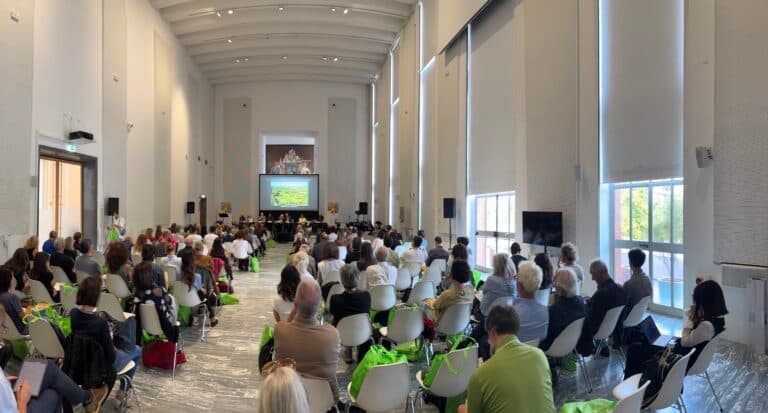
The session explored how inclusive climate infrastructure design can move from principles to practice. It brought together researchers, designers, disability organisations, and practitioners to discuss how accessibility and climate resilience can work together across housing, transport, and public spaces.
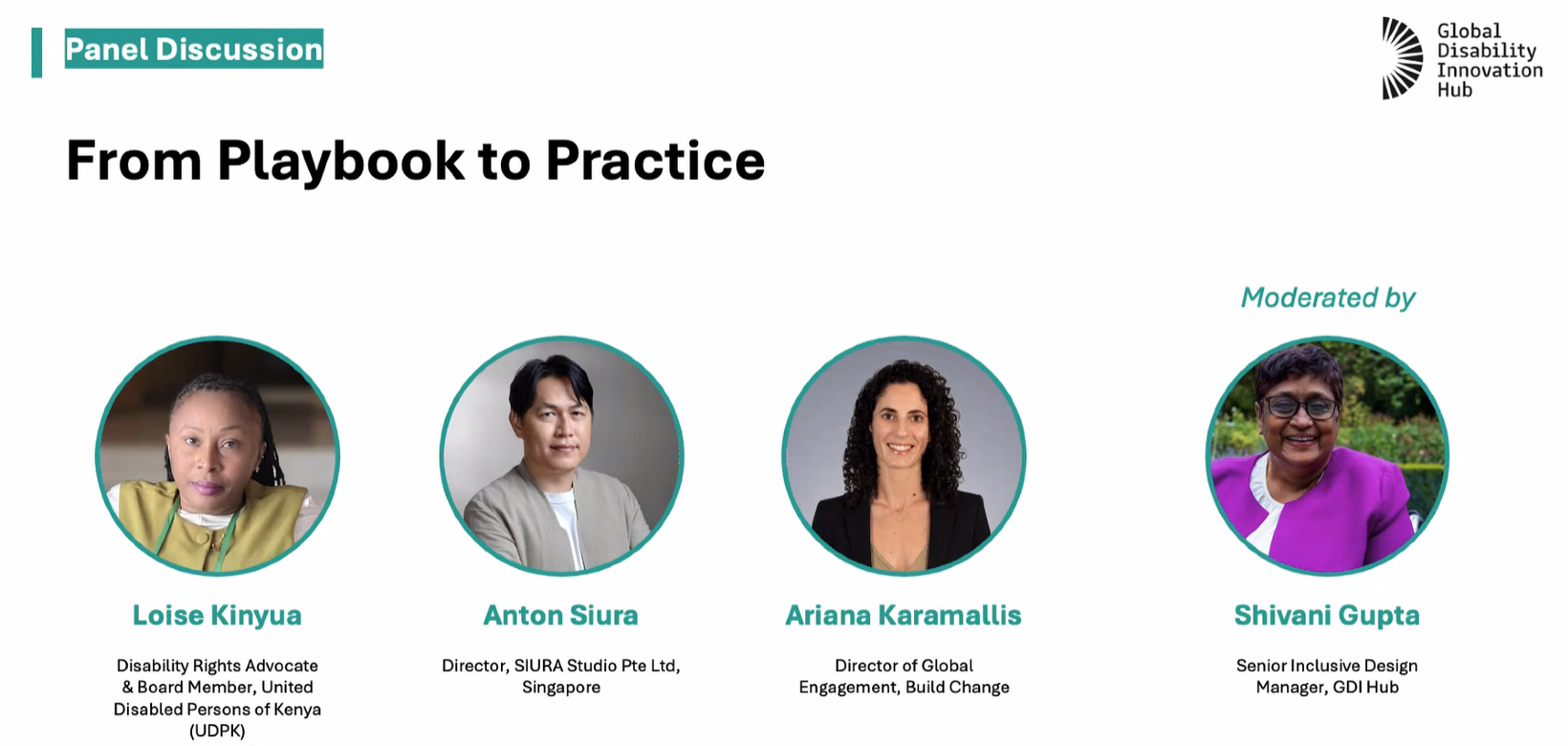
SIURA Studio Founder and Principal, Anton Siura, joined the expert panel to represent the public spaces sector. He shared lessons from SIURA Studio’s landscape architecture practice, including the transformation of Tebet Eco Park in Jakarta.
The Global Mandate: A Critical Window of Opportunity
Cities will continue to change rapidly over the coming decades. At the same time, much of the built environment that will exist by 2050 has yet to be constructed.
This creates an important opportunity. Designers and policymakers can embed accessibility and climate resilience into new infrastructure from the beginning.
The webinar also highlighted the needs of people with disabilities in cities. Over half of the world’s 1.3 billion people with disabilities live in urban areas. Extreme climate events can therefore create additional risks for many urban communities.
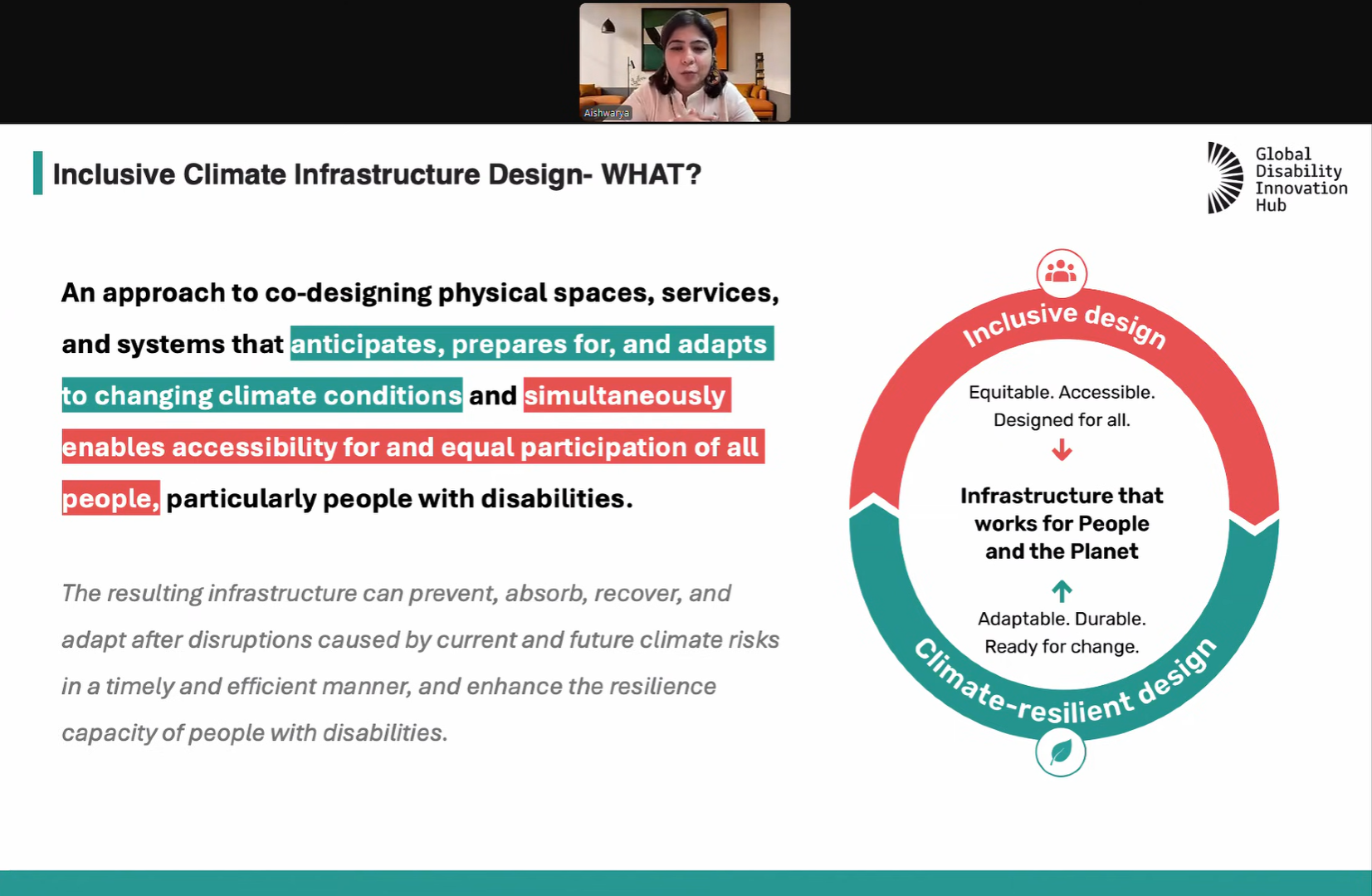
For this reason, the panel argued that disability inclusion and climate resilience should not sit in separate silos. Instead, both should inform the design process from the start.
The discussion covered several sectors:
Housing: Ariana Karamallis of Build Change discussed resilience in low-income and informal communities. She presented an 80/20 housing model. The approach standardises 80% of a retrofit for structural and seismic safety. The remaining 20% gives homeowners flexibility for changes such as wider doorways or accessible ramps.
Transport: Loise Kinua of United Disabled Persons of Kenya focused on the complete travel journey. An accessible bus cannot solve the problem if people cannot reach the bus stop. Therefore, she called for municipal authorities to involve Organisations of Persons with Disabilities (OPDs) throughout the planning process.
SIURA Studio’s Vision: Designing Public Spaces for Senses, Ecosystems, and Inclusion
Within the discussion, Anton Siura shared how SIURA Studio approaches public space through landscape architecture and urban design.
For SIURA Studio, climate adaptation and accessibility can support better public life at the same time. Rather than treating them as separate technical requirements, the studio looks at how ecological systems, human needs, and everyday experiences can work together.
Here are some of the key ideas Anton shared during the session.
1. Redefining Inclusion and Resilience
Landscape architecture often separates human needs from ecological performance. However, Anton described inclusion as a way to bring these concerns together.
“Inclusion—it means, can we include nature, right, which is an important aspect in our life, into our design? And also the inclusion, inclusivity towards the people, because we have to design for people with diverse needs, diverse age, genders, right?”
He also described resilience as a long-term process. A resilient landscape should not only respond to extreme weather. It should also strengthen ecosystems over time.
“Resilience is about creating a place that can sustain for climate change, a place that can promote biodiversity and increase the ecological performance.”
In this view, inclusive climate infrastructure design considers people and environmental systems together.
2. The Tebet Eco Park Transformation
To demonstrate these ideas, Anton presented SIURA Studio’s transformation of Tebet Eco Park in Jakarta.
The 73,000 m² site once contained fragmented spaces divided by roads and a concrete canal. Flooding also affected the site during heavy rainfall.
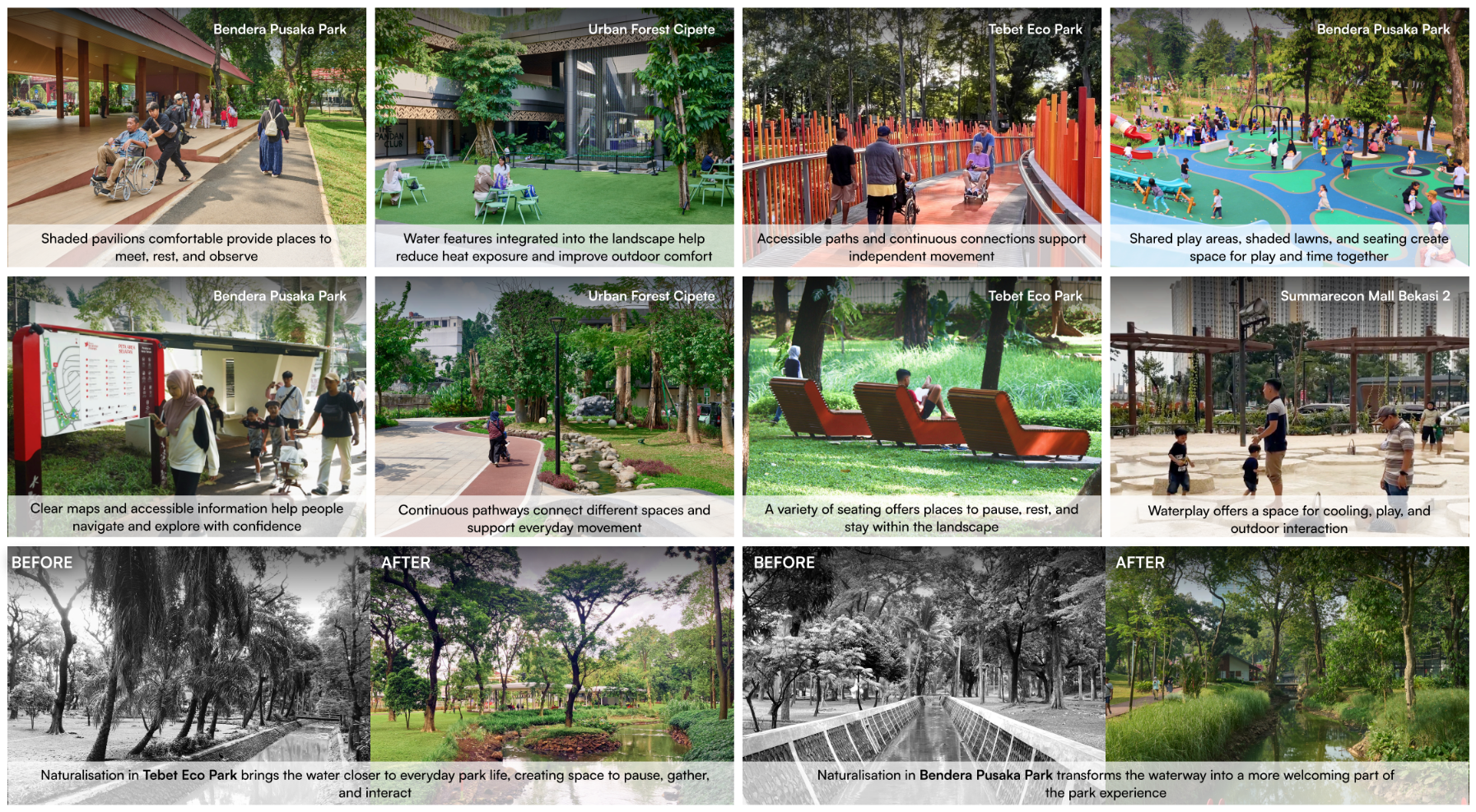
Instead of reinforcing these physical barriers, SIURA Studio worked with the site’s ecological systems. The project naturalised the water corridor and introduced planted slopes to help manage stormwater.
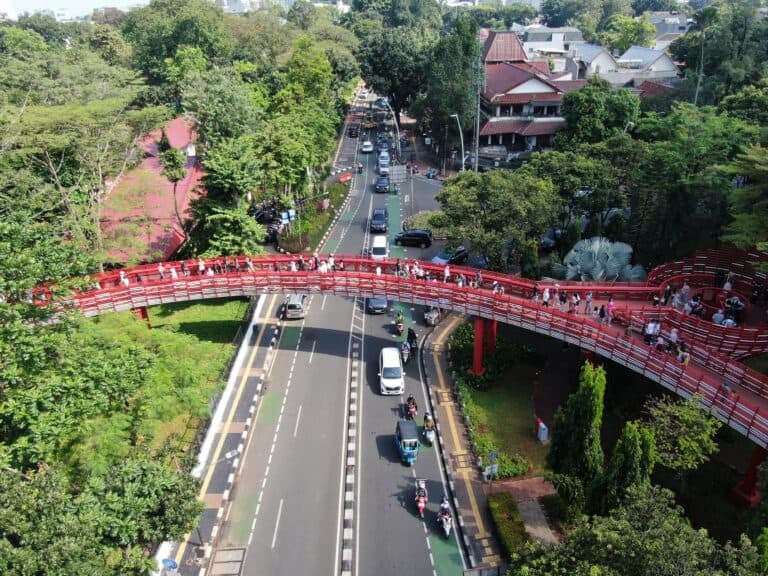
At the same time, the design reconnected the park through new paths and bridges. A 1:16 pedestrian bridge creates a more accessible connection between different parts of the site.
As a result, the park now supports a wider range of visitors.
“We changed the mindset that a park that used to be separated into four parts becomes one connected park… where people with wheelchairs also can enjoy the park freely.”
The project demonstrates how ecological restoration and accessibility can work together within one public space.
3. Moving Beyond Compliance to Outcome-Based Accessibility
Accessibility often becomes a checklist. Designers may focus on ramp gradients, handrails, benches, and other minimum requirements.
However, Anton argued for a broader approach: outcome-based accessibility.
The question is not only whether a space meets a standard. It is also whether people can use and enjoy that space comfortably.
“Change the mindset from compliance accessibility to outcome-based accessibility… Inclusivity and accessibility is not just about taking the code—we need to provide ramp 1 to 12, we need to provide bench—but also about the context: where we put the bench, where we put the trees, what kind of program we want to create.”
At Tebet Eco Park, this approach shaped the design of accessible boardwalks over constructed wetlands. Visitors can move closer to the water and planting. Wheelchair users, families with strollers, children, and other visitors can therefore experience the landscape together.
4. Designing With Context and Culture
Inclusive design also needs to respond to local habits and cultural context.
For example, Anton shared an observation from SIURA Studio’s playground projects in Indonesia. Visitors often remove their shoes before entering play areas.
“If you look at this playground, you almost see that everyone, they don’t wear footwear… it’s just the culture… when they step on the playground, they don’t want to damage the rubber floor. So they leave the shoes and sandals outside.”
The design response was simple but important. SIURA Studio integrated dedicated shoe racks near the playground entrances.
More importantly, Anton emphasised the value of direct engagement with communities.
“Instead of design for people with wheelchairs, design with people with wheelchairs—meaning engagement during the design process, during the project brief stage is equally important.”
This shift helps designers understand how people actually experience a place.
5. Driving Policy and Persuading Clients
Policy can also help move inclusive climate infrastructure design forward.
Anton pointed to Singapore’s Building and Construction Authority (BCA) guidelines as an example of how regulation can support universal accessibility. In Singapore, accessibility checks take place during the design process and again before building occupation.
However, policy is only one part of the process. Private clients may still question the value of climate adaptation or accessibility measures because of upfront costs.
In those situations, Anton highlighted the power of built examples.
“Sometimes you have to bring them to experience rather than just explaining the benefits… One park, one successful project will convince other stakeholders to do the same.”
For this reason, projects can become practical demonstrations. They show clients and communities what inclusive and climate-resilient spaces can achieve.
The Next Step: Continuing the Journey
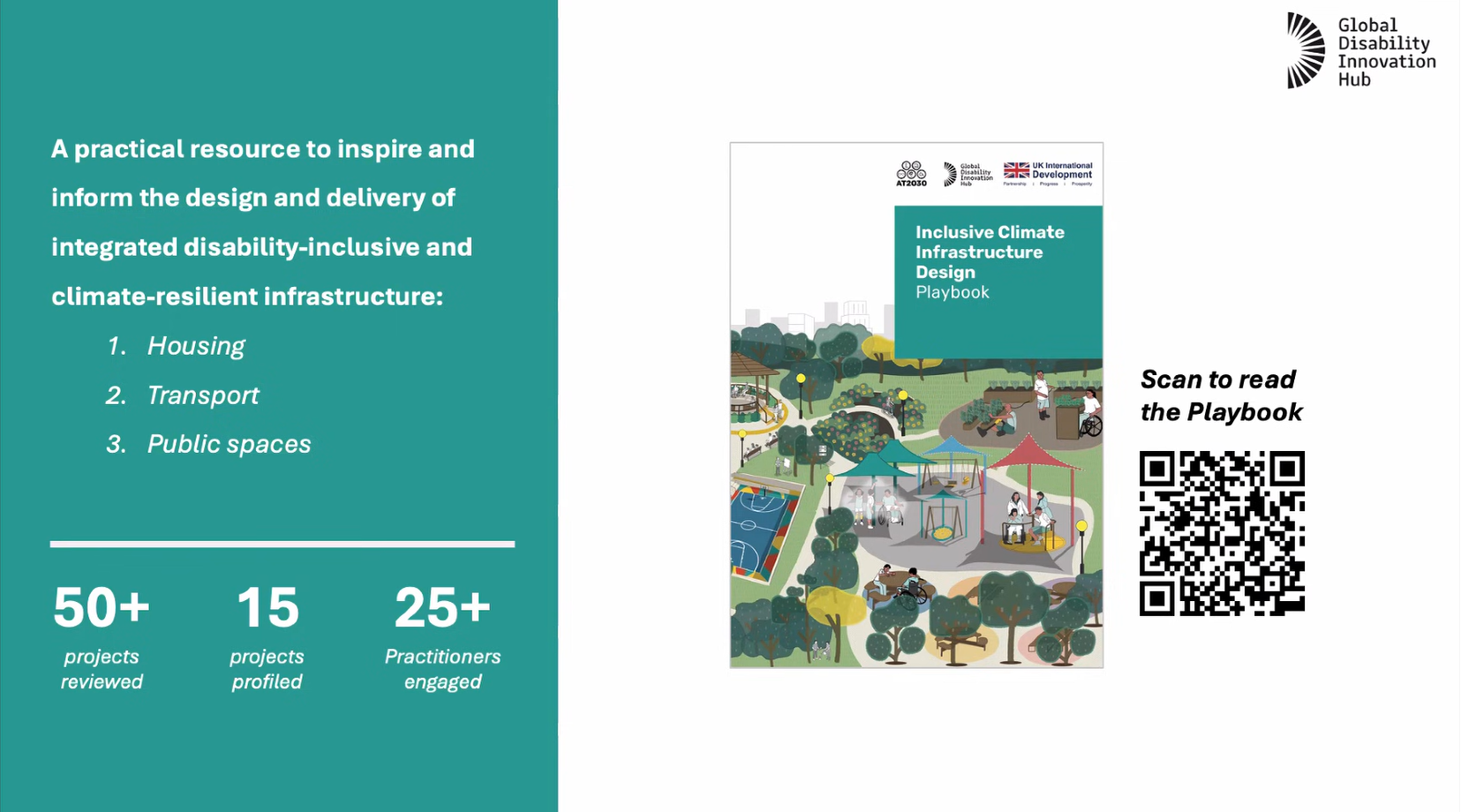
The Inclusive Climate Infrastructure Design Playbook provides a starting point for designers, practitioners, policymakers, and researchers.
The September session also showed why implementation matters. Ideas become more meaningful when practitioners can test them through real projects and everyday public use.
For SIURA Studio, this discussion reinforces an approach that continues across its work: designing public spaces that respond to climate, ecology, accessibility, and everyday life at the same time.
Ultimately, inclusive design requires both knowledge and practice. As Anton concluded during the session:
“First, as a consultant, as a practitioner, we have to be equipped with this knowledge so that we can share with our projects, and once it’s successful, things will just naturally follow and just getting better and better.”
The conversation does not end with one webinar. It continues through the projects that practitioners design, build, and share with others.
To read the full playbook, visit https://at2030.org/climate-design-playbook/