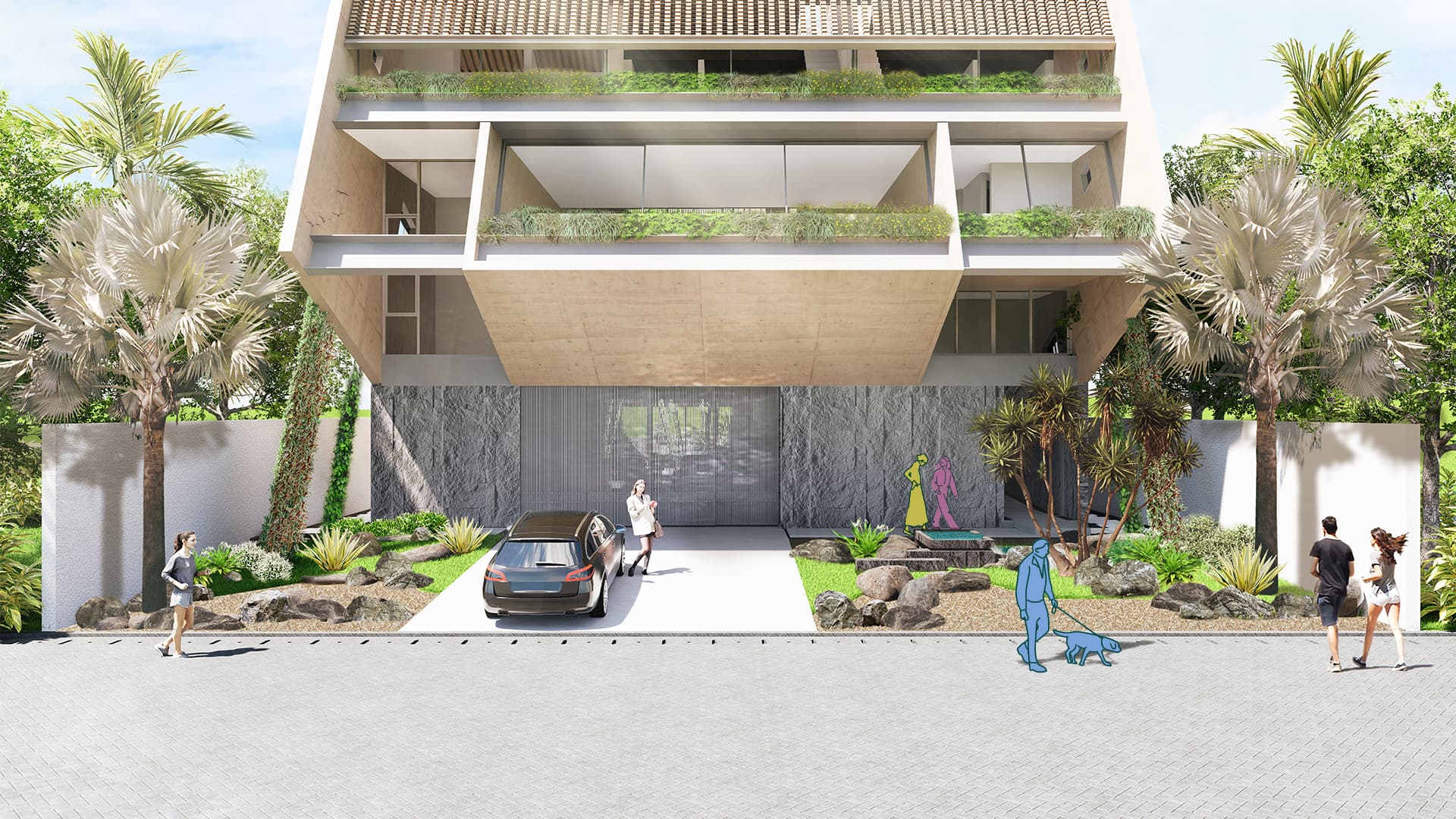
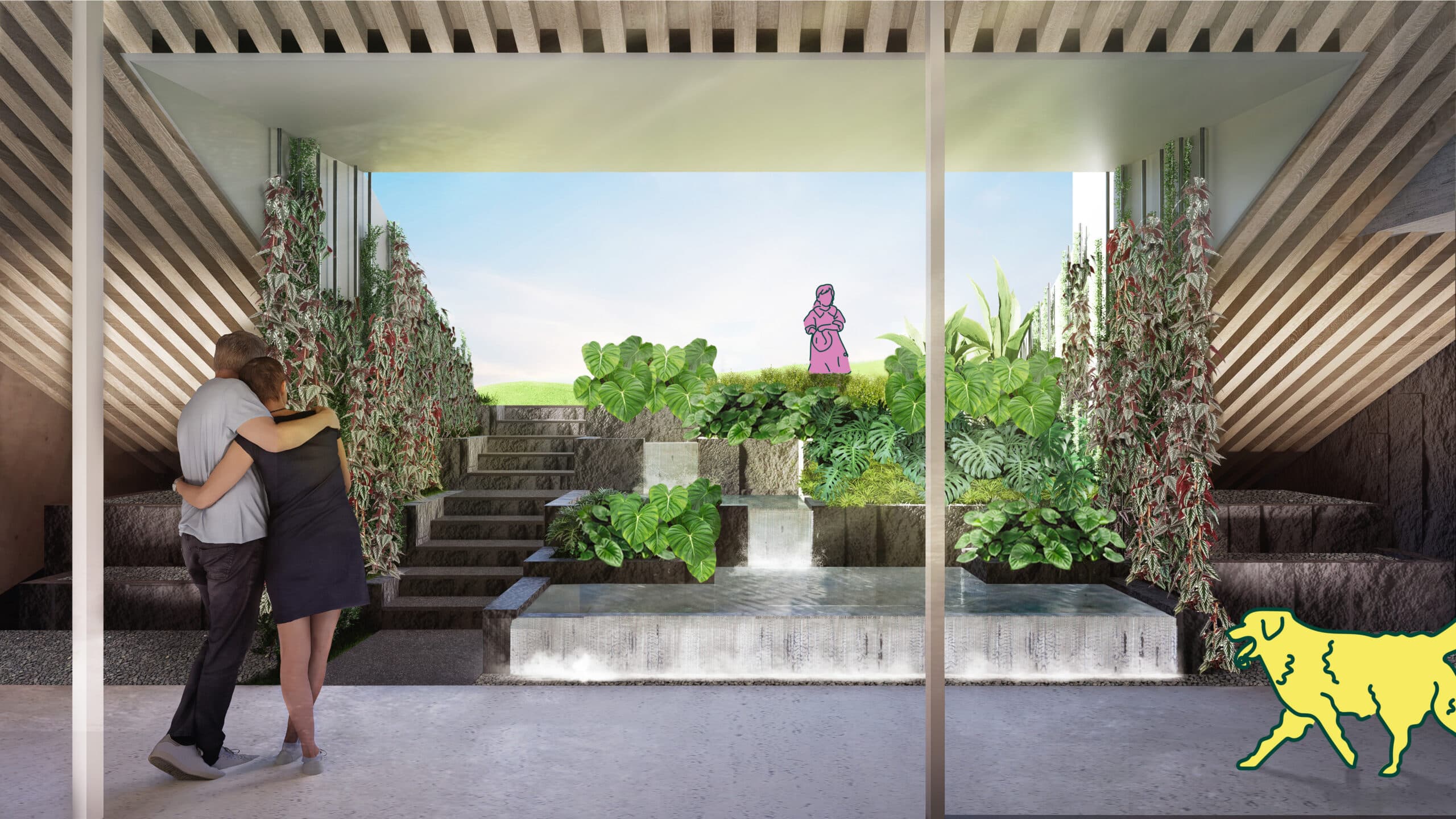
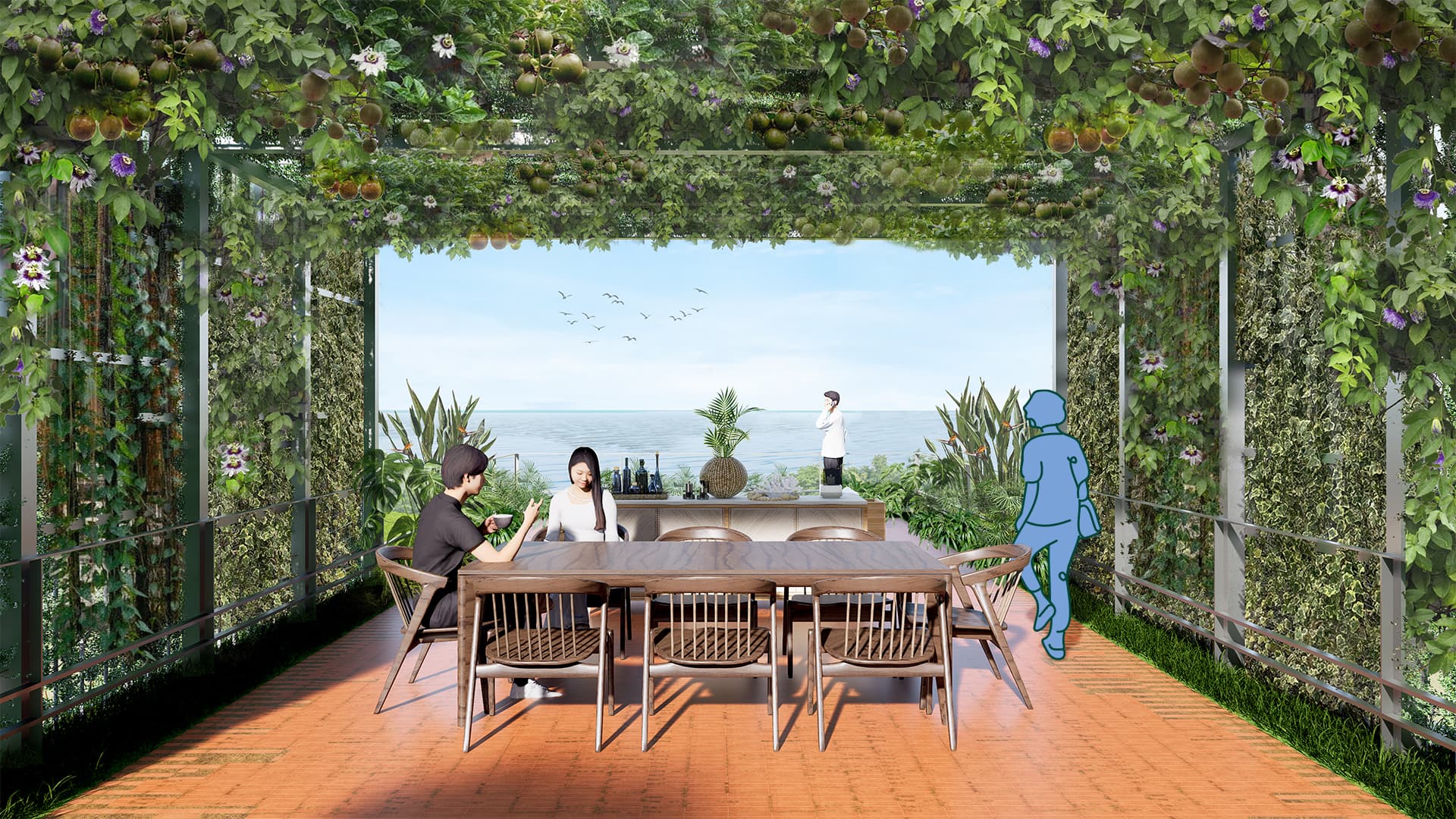
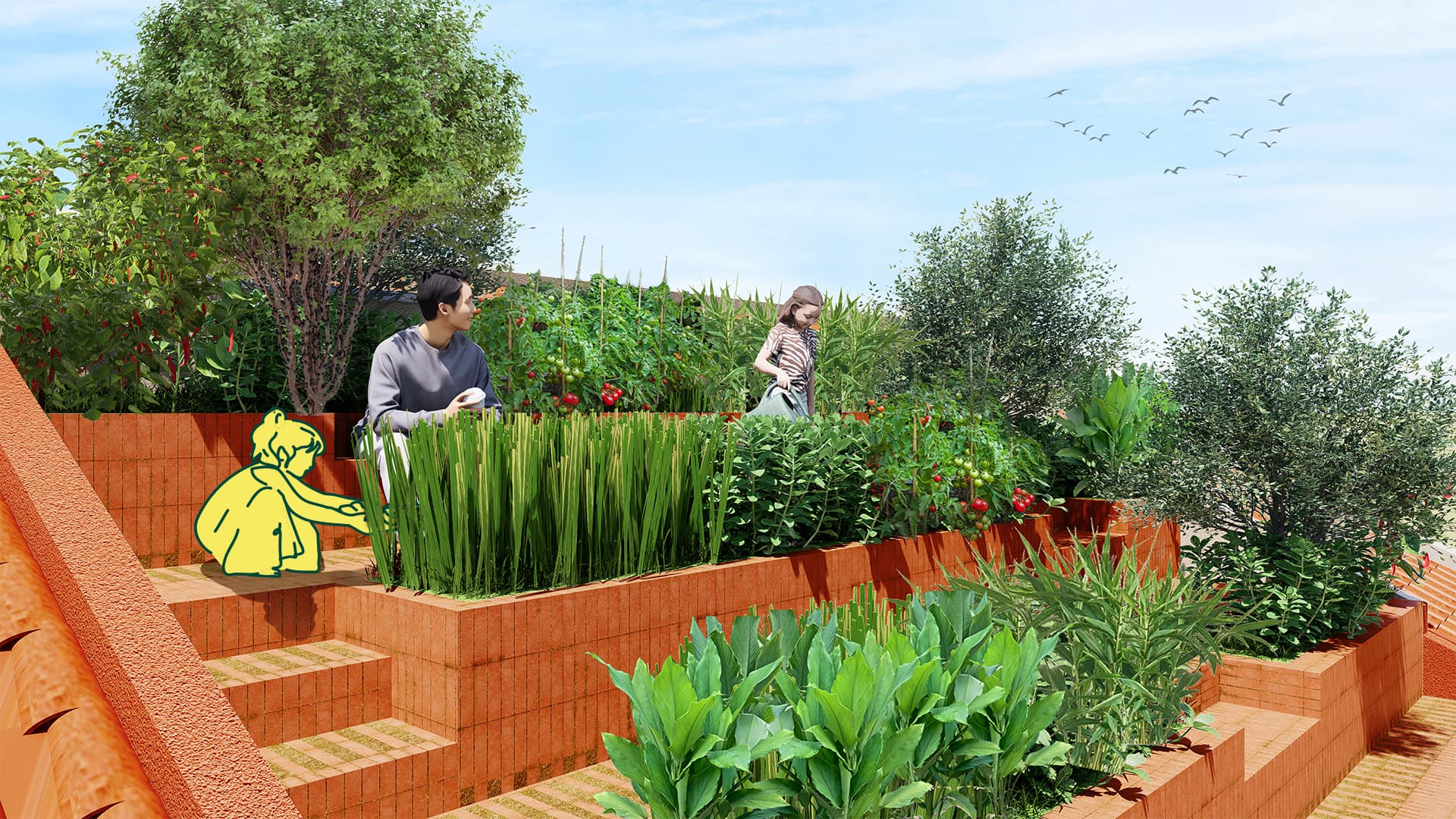
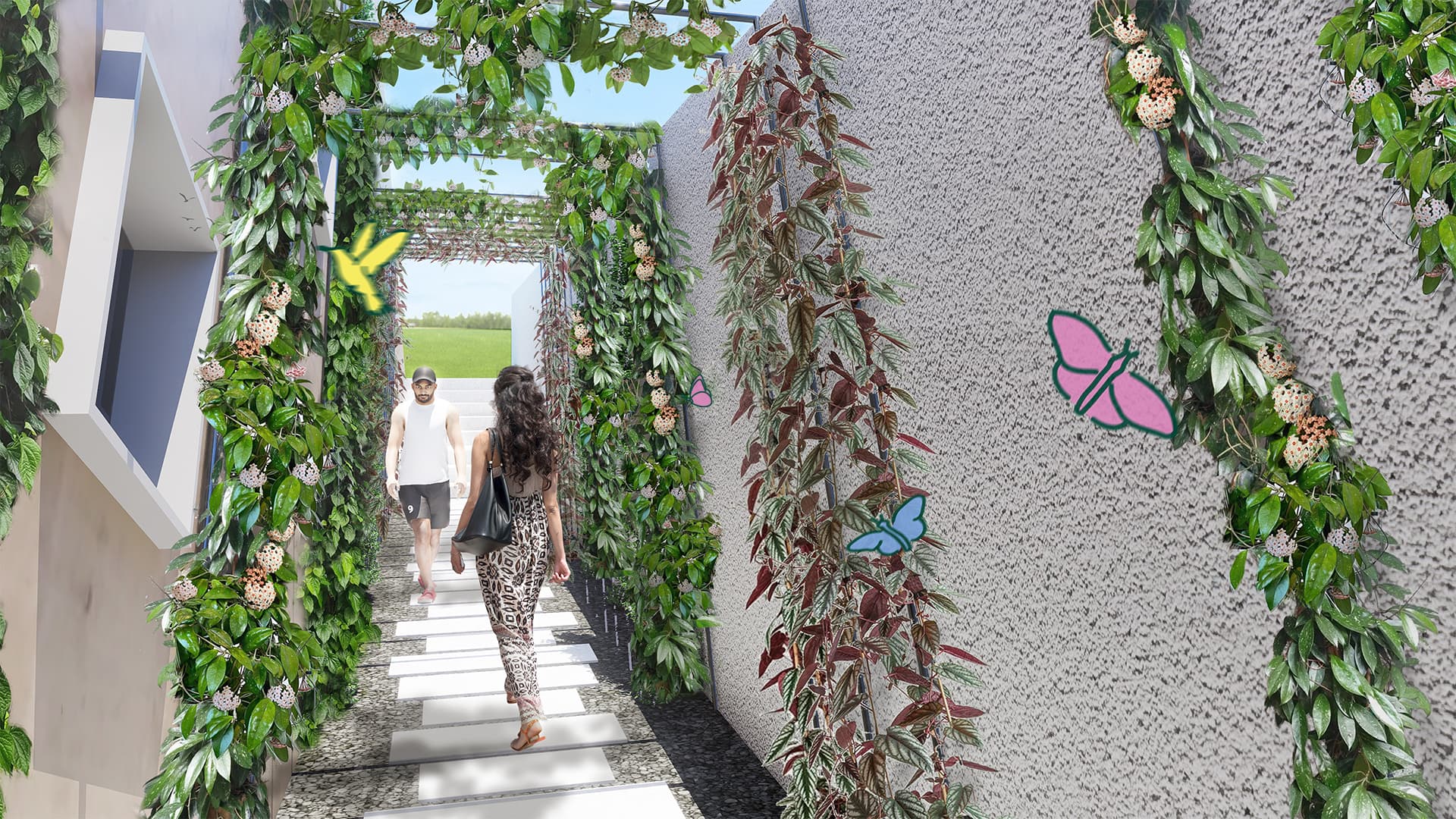
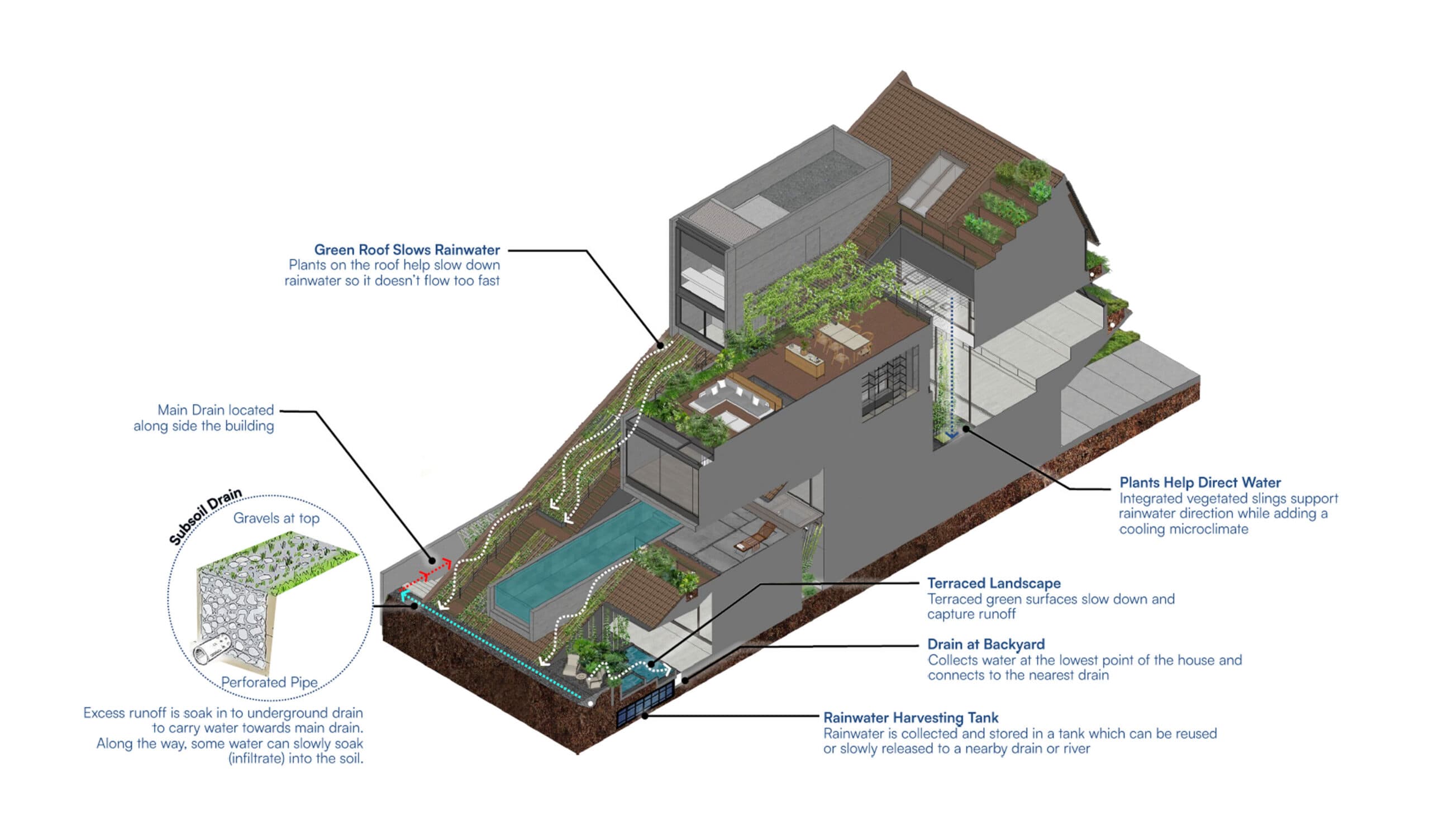
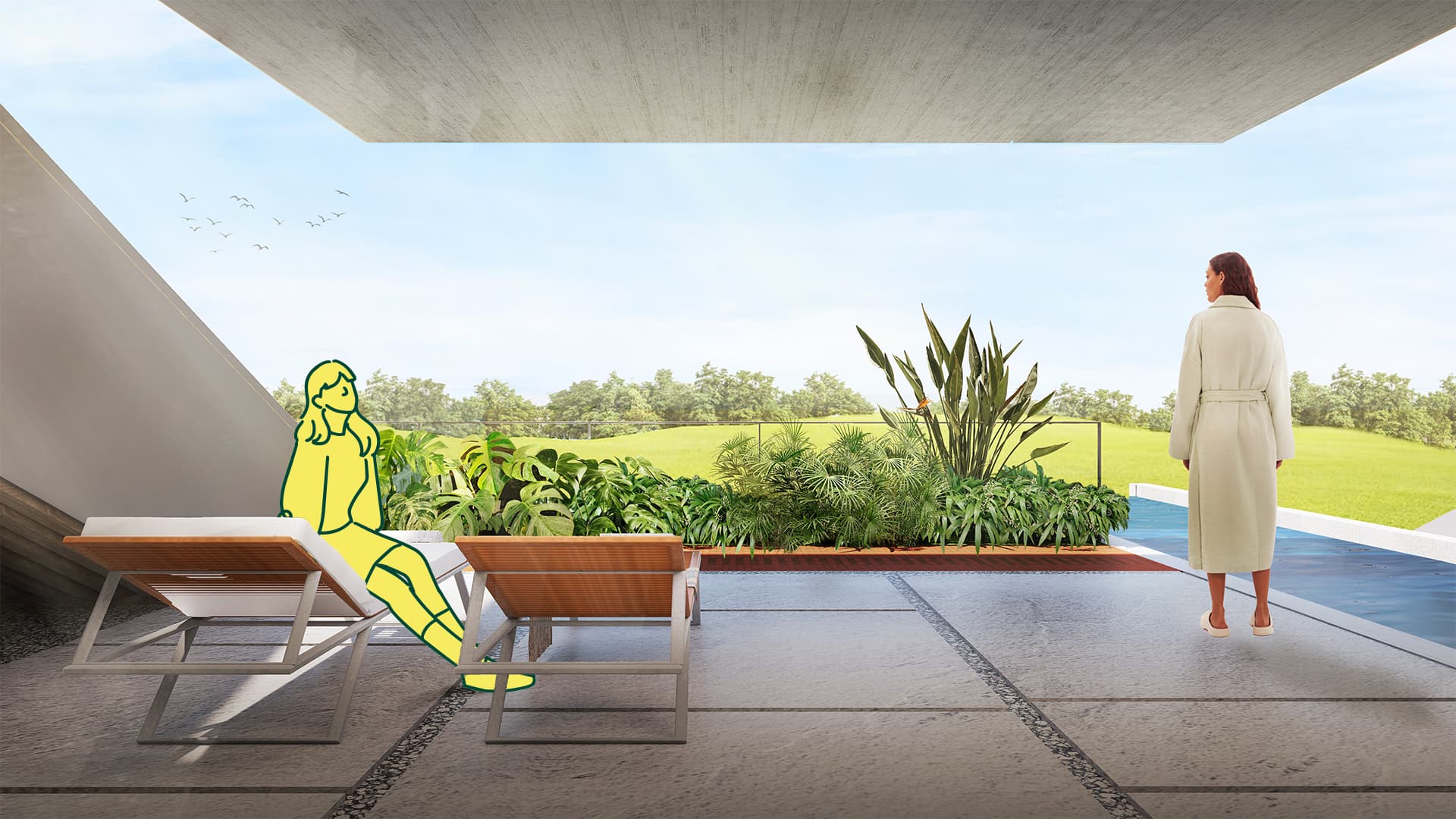
Chopin Residence reimagines the vertical home as layered landscape. Entry planting, water features, edible terraces, and rooftop gardens create comfort and privacy. A water-sensitive system filters and reuses rainwater, turning compact urban living into a resilient framework where family life thrives in shade, greenery, and intimacy.
In this residential building, landscape becomes an extension of architecture, quietly shaping how space feels and functions
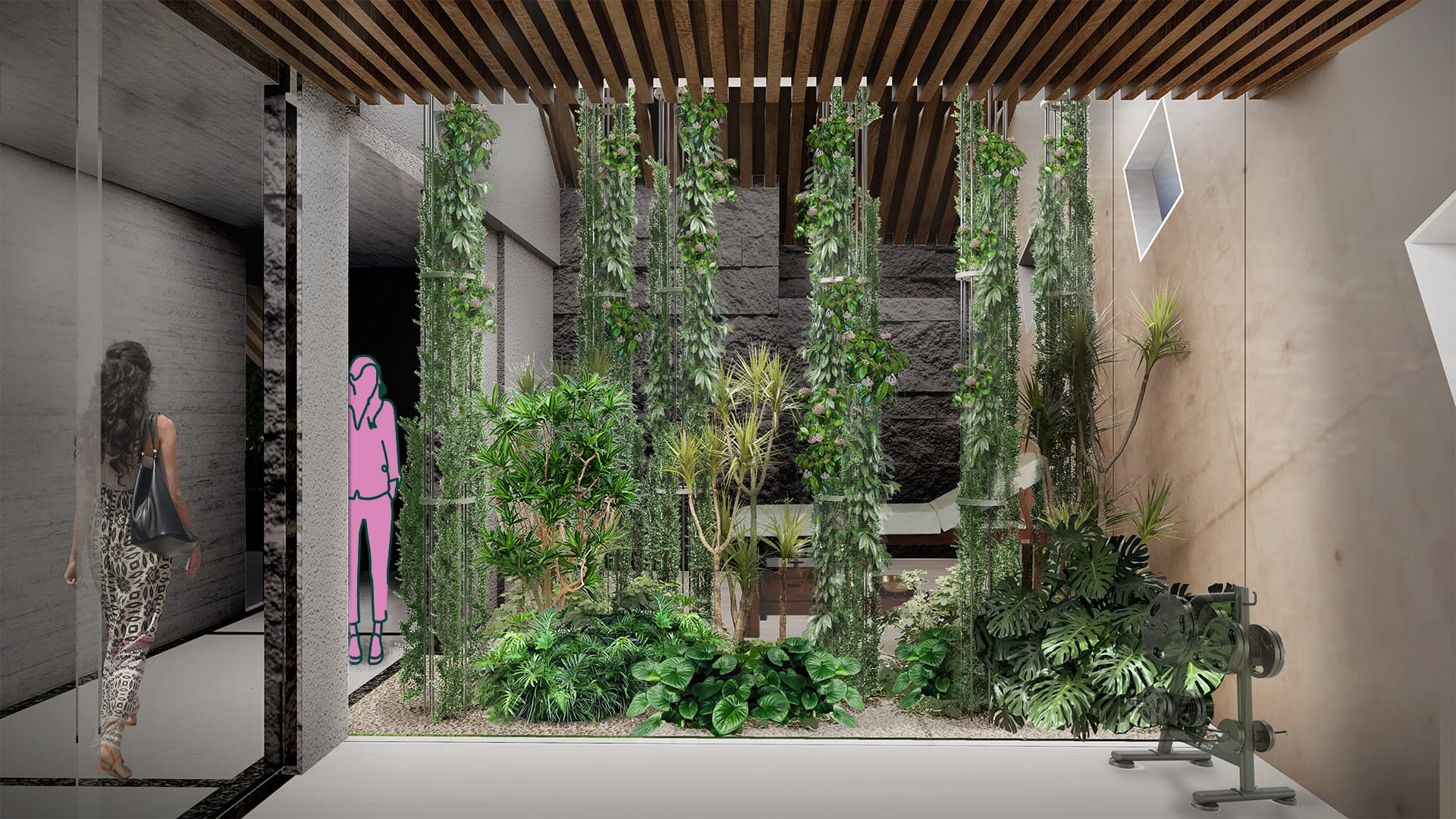
With the architecture designed inwardly for privacy, the landscape plays a vital role in bringing nature into everyday life, softening edges, enhancing livability, and extending comfort throughout the vertical home environment.
Limited ground plane and fragmented courtyards offered little access to sun or airflow
Meanwhile, rooftop and upper terraces faced exposure to heat and salinity, combined with shallow soil depths for plantings. These conditions restricted plant choices and demanded careful attention to root zones, irrigation, and resilience. Adding to this, water from the roof and vertical walls needed to be managed without overwhelming the site’s capacity for infiltration.
The design reimagines landscape as a vertical, multi-sensory experience
The landscape is envisioned as a layered extension of the house, designed to frame nature while regulating water. Planting areas are intentionally integrated throughout the building, from green roof and terraced gardens vertical planters, ensuring that greenery is not only aesthetic, but performative.