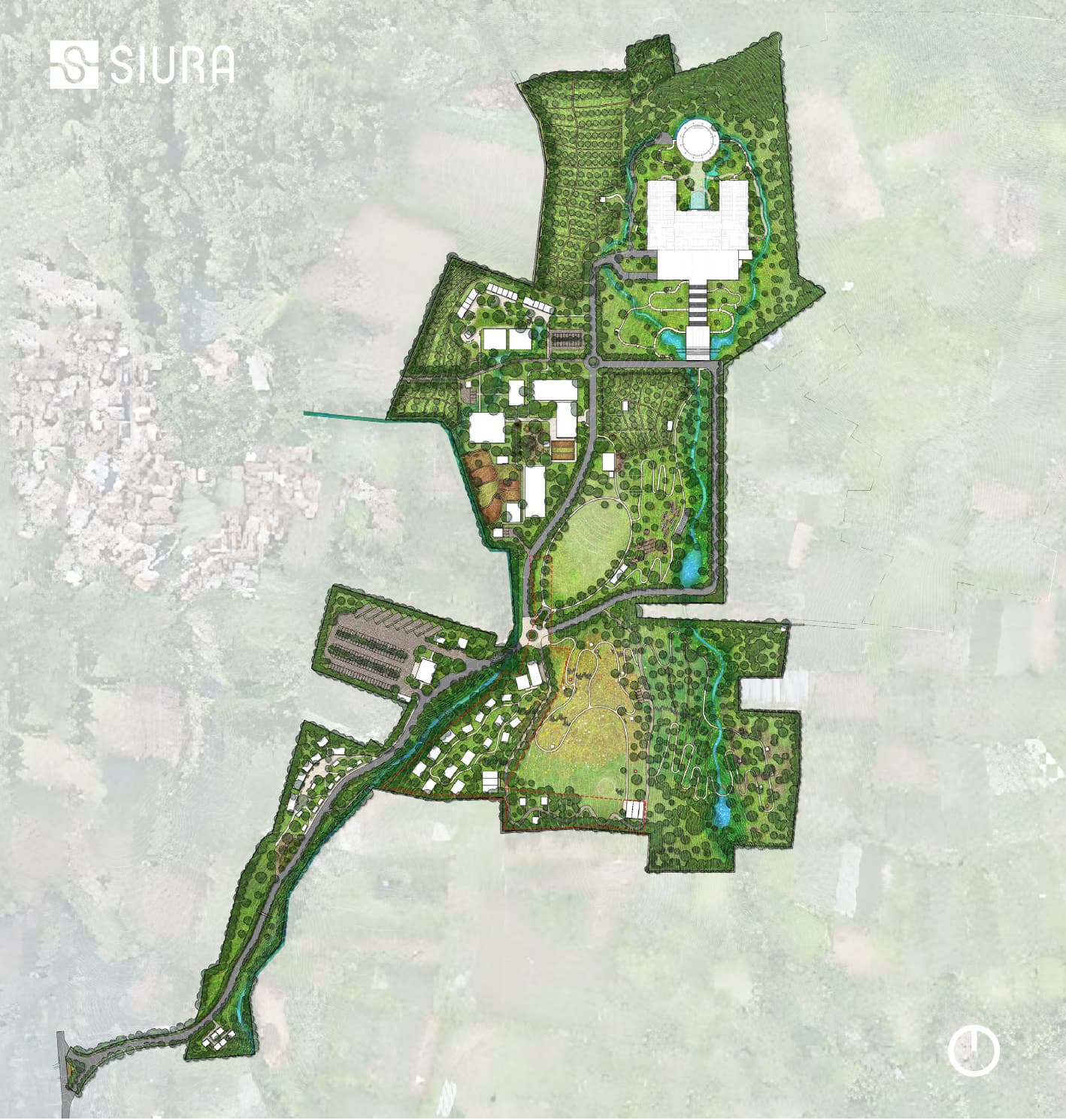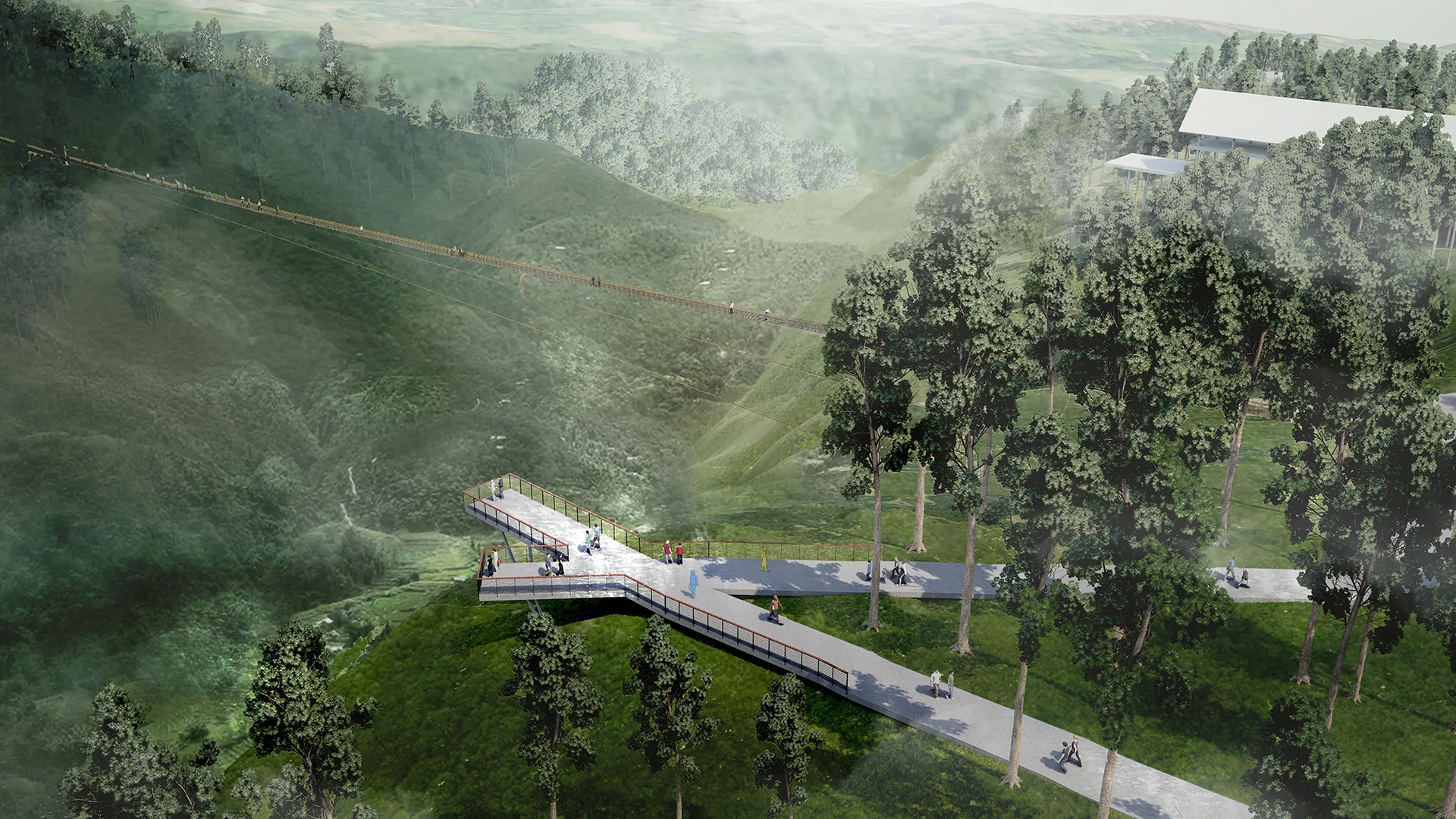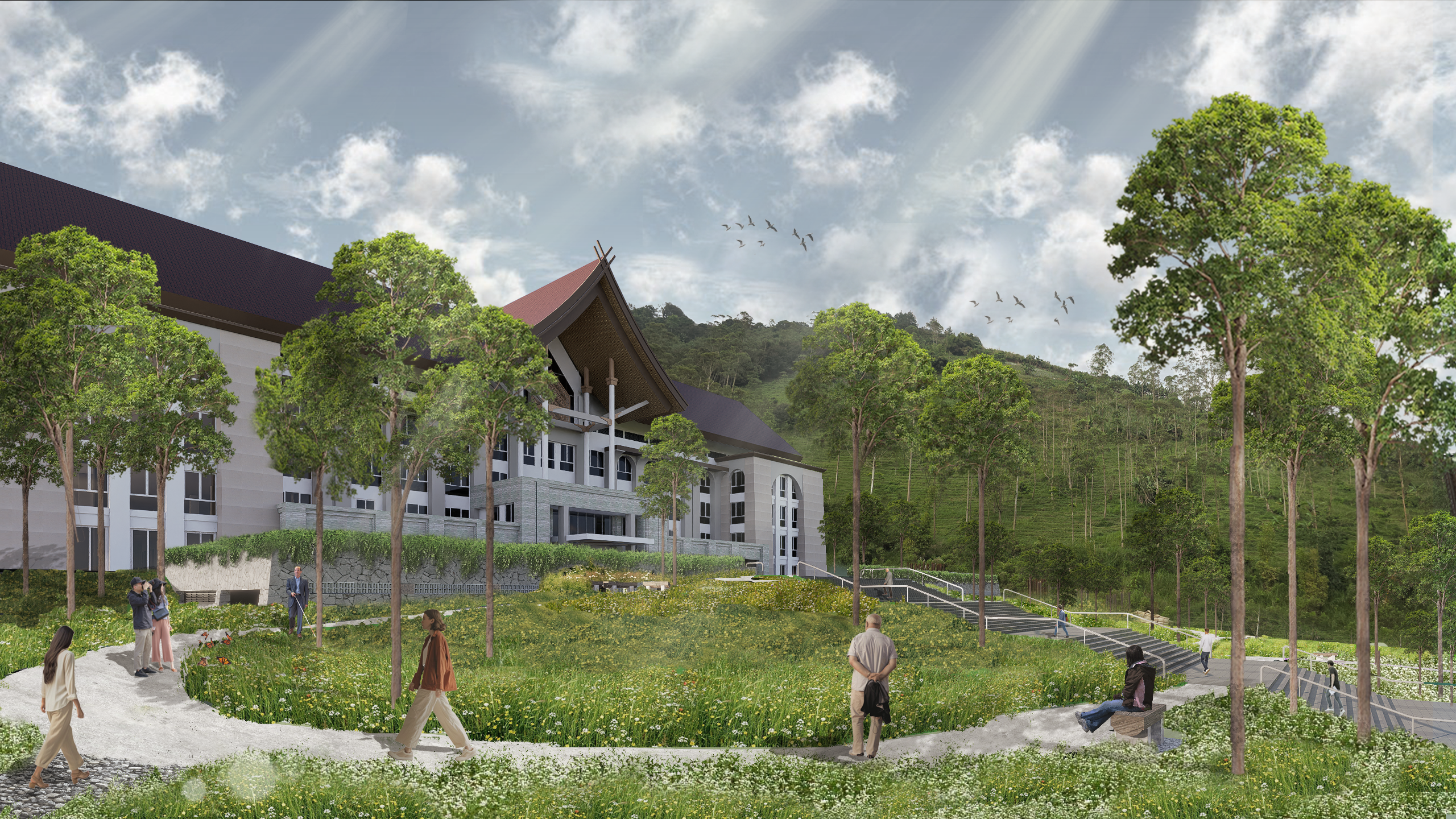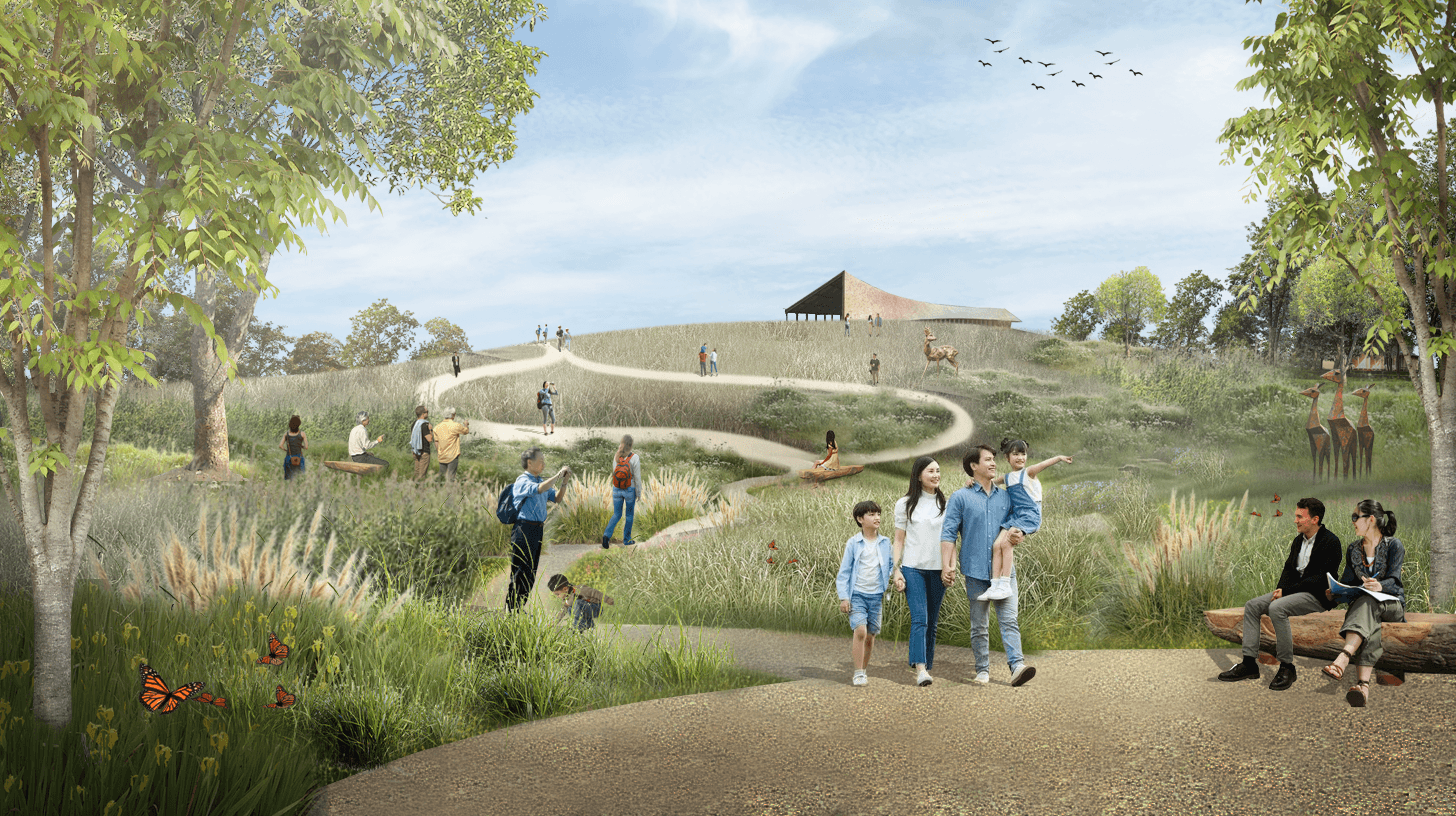
Mandatalam, Taman Budaya Cinta Alam, is a regenerative cultural landscape where nature as a mediator of harmony and restoration by respecting water. Shaped by steep terrains and local value, the masterplan invites visitors on a journey into tranquility, where social culture, educational, ecological, and spiritual experiences unfold gradually through the landscape.

A Cultural Landscape Rooted in Nature and Community
Mandatalam Masterplan is envisioned as a community-based cultural and ecological landscape rooted in a deep respect for nature and local values. Located in the highlands of Garut Regency and surrounded by Mount Papandayan, Guntur, and Cikuray, the site holds strong environmental, cultural, and spiritual significance. Conceived as more than a destination, Mandatalam integrates ecological restoration, productive education, and emotional healing through a regenerative landscape approach guided by the Sundanese philosophy of Silih Asah, Silih Asih, Silih Asuh—learning together, caring for one another, and nurturing collective growth.
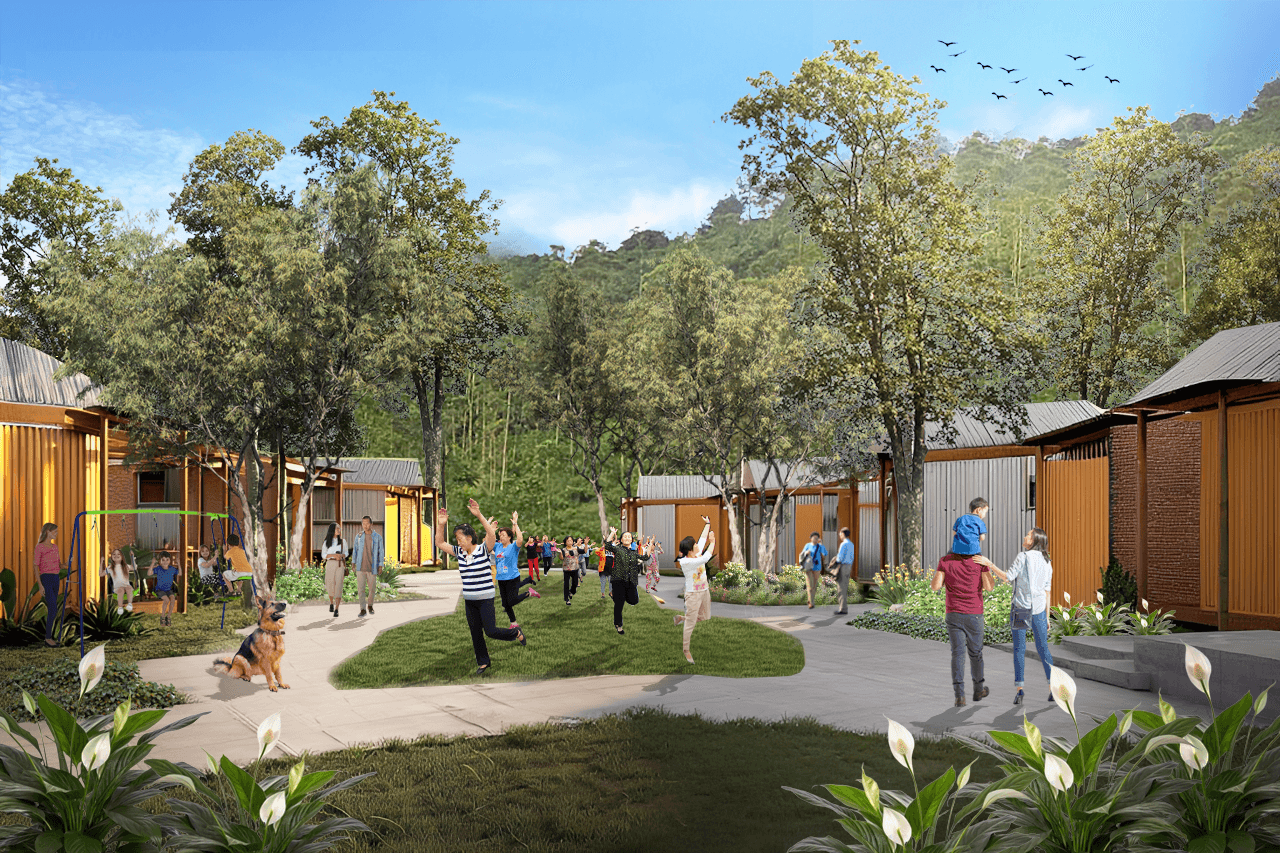
Designing on Steep Terrain with Ecological and Social Sensitivity
The site’s steep topography presents significant environmental and technical challenges. Sharp elevation changes increase the risk of surface runoff, soil erosion, and structural instability, requiring careful mitigation through landscape-led water management strategies. Seasonal climate patterns further influence accessibility and activity cycles, demanding circulation systems that remain functional under varying weather conditions. Beyond physical constraints, Mandatalam is closely connected to surrounding residential areas, positioning it as both a community-facing space and a retreat. The challenge lies in establishing a clear yet seamless transition between public, semi-public, and private zones, allowing openness and social engagement while preserving privacy, contemplation, and ecological balance. This spatial sequencing is designed to mirror an emotional and spiritual journey rather than a rigid zoning boundary.

A Journey Shaped by Water, Landscape, and Inner Transformation
Spatial zoning follows a narrative sequence, from lively public zones to productive communal spaces, and finally into quiet, private areas. Programs such as community markets, workshops, restaurants, villas, gardens, farmcation areas, and cultural pavilions are arranged to reflect this progression, supporting both social interaction and personal retreat. Circulation paths are designed as immersive walks through nature, while low-emission buggy systems are separated from private vehicles to minimize environmental impact.
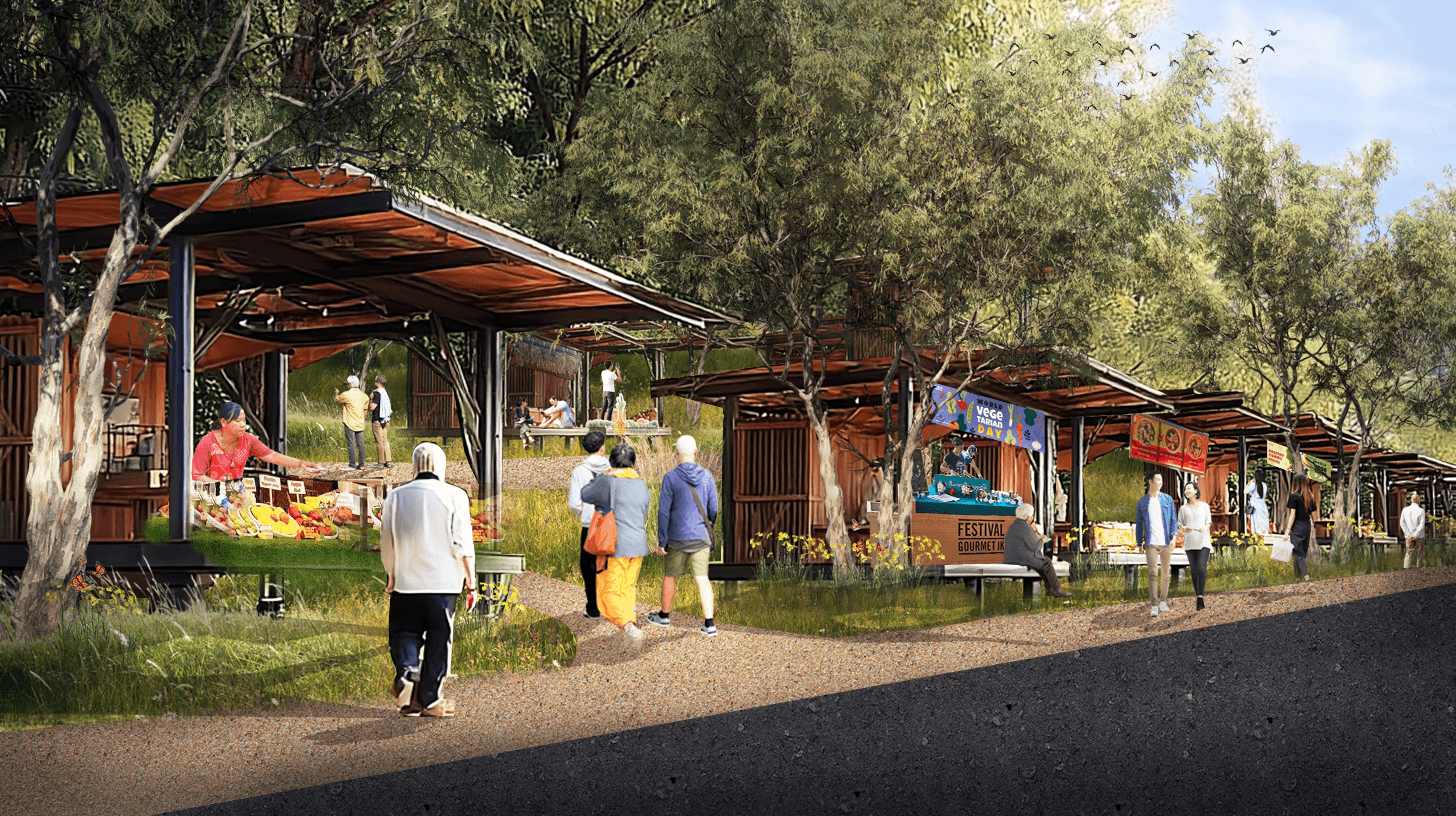
Topography is not treated as a limitation but as a defining character. Natural contours are shaped into a layered water-catchment and infiltration system, allowing rainwater to move slowly through detention ponds, vegetated buffers, and natural waterways. Ecological corridors strengthen biodiversity by connecting the site with surrounding protected forests, while aquatic habitats and pollinator-friendly landscapes support ecological balance. Through this integrated strategy, Mandatalam becomes a living landscape, one that fosters learning, healing, and connection, where human activity and nature evolve together in quiet balance.